

Maliki Fiqh
اَلْفِقْهُ الْمَالِكِيّ
Learn the essential rulings a Muslim must know from the classical text al-Murshid al-Mu'īn with Shaykh Dr. Ahmed Saad, in English.
6 months starting 7th January. Thursdays. 7:30pm - 9pm UK Time.
All levels welcome · Every session recorded · Live Q&A each week

6 Months
Begins 7th January
2 Hours Weekly
Thursday, 7:30pm - 9pm UK
Live via Zoom
Recorded for life
WHY STUDY FIQH
Act with knowledge, live with Ihsan.
The Prophet ﷺ said, “When Allah wishes good for someone, He gives him understanding of the religion.” Fiqh is that understanding put into practice, turning knowledge into worship done properly, and worship into a life of ihsan.
Studying fiqh protects us from two extremes: the carelessness of doing what feels right, and the rigidity of following rulings without understanding them. It teaches us the rulings whilst giving a glimpse of the framework behind the rules, how the scholars drew them from the Quran and Sunnah, and why differences of opinion exist and should be respected.
Valid or Invalid?
Learn that conditions that make Your wudū, prayer, fasting and your zakāh valid or invalid.
Learn knowledge for Yourself
Seeking Knowledge is one of the best deeds a Muslim can engage in.
Keep the Tradition Alive
When the next generation have questions, you will have the answers.
THE SYLLABUS
Seven Chapters, from creed to matters of the heart
Ibn ʿĀshir covers all the essential chapters that a Muslim will need throughout their life.
| I | Creed | كِتَابُ الْعَقِيدَة | |
| The basic principles every Muslim is obliged to believe, the proofs they rest upon, and the pillars of Islam. | |||
| II | Purification | كِتَابُ الطَّهَارَة | |
| The obligations and sunan of wudū, what breaks it, ghusl and its obligations, and tayammum with its obligations and sunan. | |||
| III | Prayer | كِتَابُ الصَّلَاة | |
| The obligations and sunan of the prayer, the adhān, the recommended and the disliked, farḍ ʿayn and farḍ kifāya, making up Fajr, the prostrations of forgetfulness, the laws of Jumuʿah, and the conditions of the imām. | |||
| IV | Zakāh | كِتَابُ الزَّكَاة | |
| What is due and when it falls due, the zakāh of livestock, and zakāt al-fiṭr. | |||
| V | Fasting | كِتَابُ الصِّيَام | |
| The fast of Ramaḍān and the rulings that govern it. | |||
| VI | Ḥajj | كِتَابُ الْحَجّ | |
| The rites of the Ḥajj and Umrah. | |||
| VII | Spirituality | أُصُولُ التَّصَوُّف | |
| The principles of tasawwuf. | |||
TIMINGS
Two hours a week, for six months
Live sessions
One live session each week with Shaykh Dr. Ahmed Saad, online via Zoom.
Recorded for life
Lfietime access to all recordings so you can catchup or review whenever you need.
Questions and Answers
Question and answer time at the end of each class.
Follow the matn
Follow along with the text. (The text can be purchased separately from online retailers)
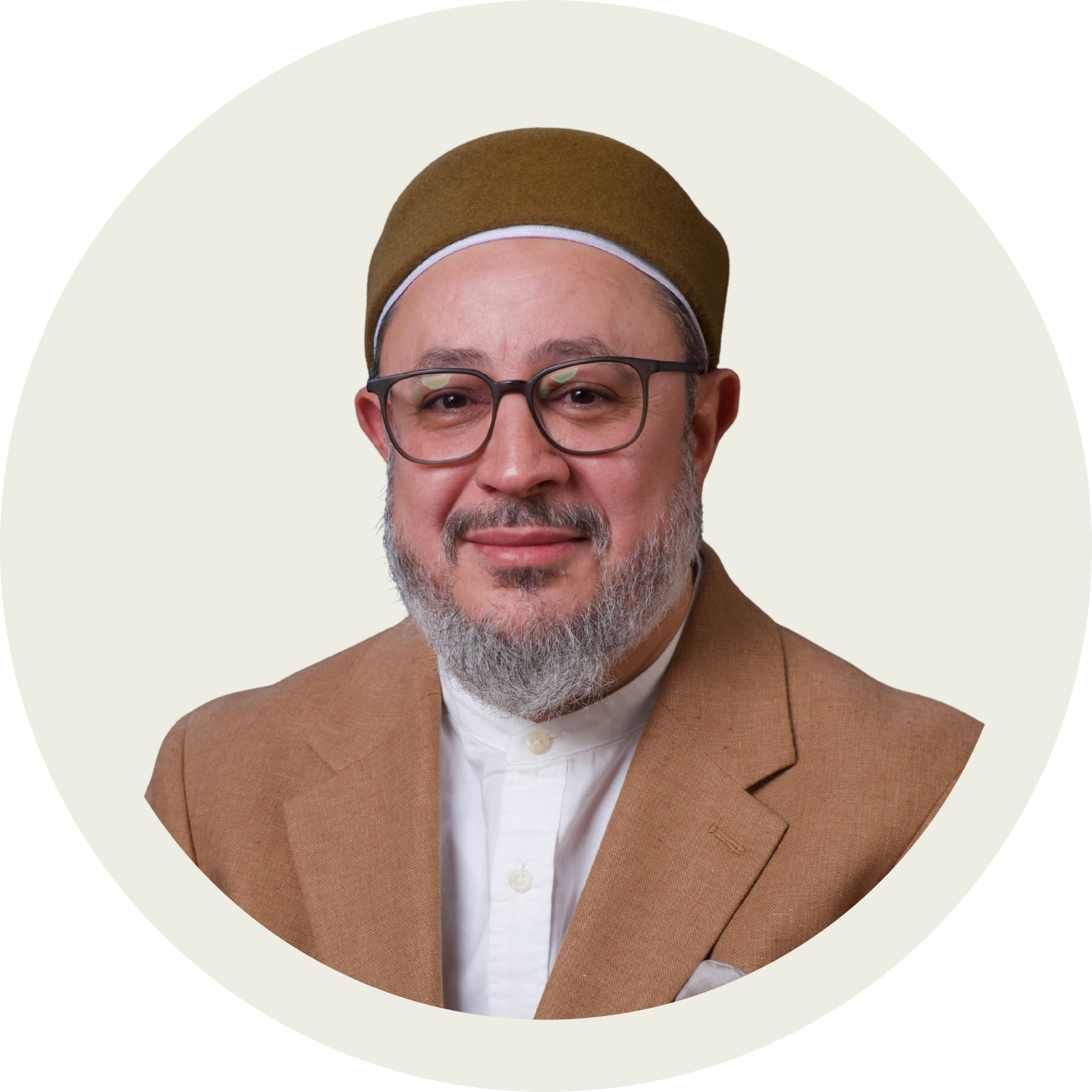
YOUR TEACHER
Shaykh Dr. Ahmed Saad has spent over two decades teaching across the classical Islamic sciences.
With over two decades of rich scholarly experience and practical wisdom, Shaykh Ahmed brings a unique perspective to his teachings. His educational background combines rigorous traditional Islamic learning with Western academia, providing profound and relevant insights to modern Western contexts. Shaykh Ahmed holds a BA in Islamic Studies from Al-Azhar University and a PhD in Theology and Religion from the University of Birmingham, UK. With his engaging delivery and deep empathy, Shaykh Saad excels at making complex concepts accessible and relevant to his audience.
ENROLFROM OUR STUDENTS
Our most requested course
The classes with Shaykh Ahmed Saad have been of immense benefit. He explains the classical texts of the Islamic sciences with the modern context in mind, which makes them relevant as well as accessible. The sessions are engaging, rich in wisdom and anecdotes, and lightened with humour. An added blessing has been meeting such kind sisters within the same community. I would highly recommend the classes both to those who have already begun their journey in Islamic learning and to anyone unsure of where to start.
INAS · BIRMINGHAM
Second testimonial. Ideally one that speaks to the length of the commitment being worth it.
NAME · CITY
Third testimonial. Ideally one from someone who started as a complete beginner.
NAME · CITY
WHO IT IS FOR
Open to all levels, no Arabic required
You will feel at home here if
- This is your first time studying fiqh formally, and you want a thorough breakdown of the essentials.
- You have picked up fiqh in pieces over the years and now want to study it systematically.
- You have studied before and want to progress and develop further.
What is required from the student?
- Two hours a week, trying your best to attend the live sessions where possible.
- A notebook and pen, and the willingness to review between sessions.
- No Arabic required but it can aid the learning process
- Six months of focused and committed attention.